Tech & Wi-Fi
Wi-Fi and crew welfare: How connectivity transforms life onboard
Learn why reliable Wi-Fi is a crew welfare right—not just a perk. This guide covers standards, tech models, coverage, and how to advocate for better onboard connectivity.
23 April 2026
Wi-Fi and crew welfare: How connectivity transforms life onboard
TL;DR:
- Reliable Wi-Fi is crucial for crew mental health, family communication, and basic needs at sea.
- Quality standards include fast speeds, fair allowances, low latency, and 24/7 coverage.
- New technology models like voucher-based and OpenRoaming improve privacy, fairness, and session continuity.
Not having Wi-Fi is frustrating. Having bad Wi-Fi might actually be worse. For crew members on ferries and cruise ships, the difference between a reliable connection and a broken one isn’t just about entertainment—it’s about mental health, family bonds, and basic rights. Maritime regulatory guidance now treats shipboard internet as core welfare infrastructure, recommending sufficient bandwidth and reasonable or zero charges. This guide breaks down what good connectivity really means for you, and how to identify whether your ship is meeting the standard.
Table of Contents
- Why Wi-Fi is critical for crew welfare
- Quality and fairness: What good Wi-Fi for crew should look like
- Technology models: Making Wi-Fi reliable and accessible
- Coverage and session continuity: Why ship-wide Wi-Fi matters
- The real Wi-Fi welfare gap: What most solutions miss
- Next steps: Getting dependable Wi-Fi for your crew
- frequently asked questions
Key Takeaways
| Point | Details |
|---|---|
| Wi-Fi is a welfare essential | Connectivity supports mental health, contact with family, and digital access at sea. |
| Quality and fairness matter | Good Wi-Fi must be affordable, reliable, and cover all essential crew needs. |
| Technology design impacts access | Voucher models, privacy, and roaming Wi-Fi improve reliability and coverage for crews. |
| Audit real crew experience | Welfare progress means measuring outcomes, not only providing service in name. |
Why Wi-Fi is critical for crew welfare
With regulatory recognition established, let’s look deeper at what makes Wi-Fi so vital for seafarer wellbeing.
Internet access isn’t a perk anymore. For many crew members, it’s the only thread connecting them to life ashore. You might be weeks away from home, working long shifts, and the only way to check in with your family is through a video call that keeps cutting out. That matters enormously.
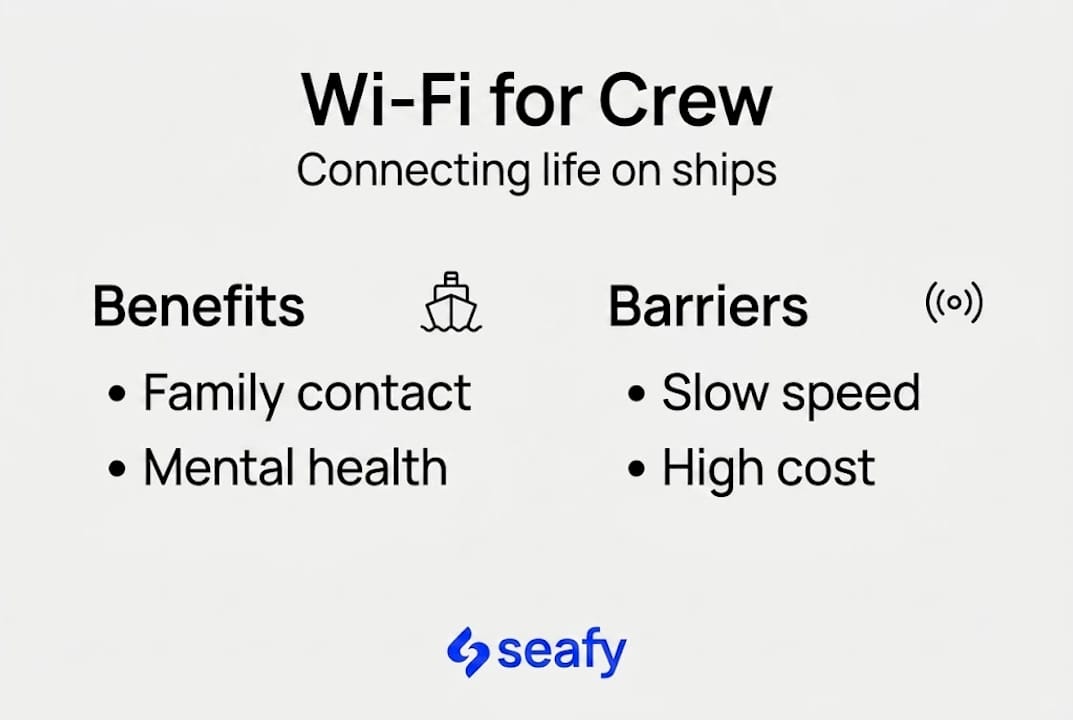
Daily internet access for messaging, video calls, email, and basic online services is now part of recognized welfare standards at sea. This isn’t just a recommendation from well-meaning advocates—it’s formal regulatory guidance that shapes how ships should operate.
Here’s what inadequate Wi-Fi affects directly:
- Family communication: Video calls, messaging apps, and shared photos keep relationships alive across long voyages
- Mental health: Access to counseling platforms, support groups, and mental wellness apps requires a stable connection
- Banking and finances: Online banking, money transfers to family, and managing bills all need reliable internet
- Learning and career: Many crew members pursue certifications or language study during off-hours
- News and information: Following events at home or staying informed about conditions at sea
“When the internet works, morale climbs. When it doesn’t, small problems become big ones. The connection between digital access and crew wellbeing is not theoretical—it’s something you feel on every long voyage.”
Shared devices add another layer of concern. When personal Wi-Fi isn’t available, crew members may share terminals, compromising privacy. Understanding Wi-Fi’s impact on ship operations helps clarify why personal, private access is not just preferred but necessary.
Quality and fairness: What good Wi-Fi for crew should look like
Understanding that not all Wi-Fi is created equal, it’s vital to recognize how quality and fairness influence real crew experiences.
Having a Wi-Fi network on board means very little if the speeds are too slow for a video call or the monthly allowance runs out in three days. Quality and fairness are two different problems that often show up together.
Recent empirical data reveals significant disparities: some ships offer solid internet while others struggle with poor allowances, unreliable signals, and high costs. You shouldn’t have to choose between calling your kids and checking your bank account.
Here’s what genuinely good crew Wi-Fi looks like:
- Speed: At minimum, enough bandwidth to support HD video calling per user
- Low latency: Under 150ms ideally, to keep conversations natural and apps responsive
- Fair allowances: Daily or weekly data allotments that actually cover real usage
- Zero or low cost: No predatory pricing that eats into your salary
- Round-the-clock access: Not limited to port arrivals or off-peak hours
| Feature | Good standard | Poor standard |
|---|---|---|
| Speed | 5+ mbps per user | Below 1 mbps per user |
| Cost | Free or nominal | High per-MB charges |
| Daily allowance | 1 GB or more | Under 200 MB |
| Video call support | Yes, stable | Often interrupted |
| Coverage areas | All crew zones | Common rooms only |
📊 Key finding: seafarer Wi-Fi satisfaction data shows persistent gaps between what crew members need and what most ships actually deliver—especially on routes where satellite coverage is limited.
Technology models: Making Wi-Fi reliable and accessible
Now that we’ve explored the need for fairness and quality, how do technology choices help bring these standards to life on ships?
The good news is that the industry is catching up. New connectivity models are being built with crew experience in mind, not just operational efficiency.
Pay-as-you-go and voucher-based systems are now being deployed to give crew members more control and privacy. These systems separate personal data from ship operations, meaning your browsing isn’t tied to the vessel’s IT infrastructure.
Here are the main models in use today:
- Free allocation model: Ships provide a fixed daily or weekly data amount at no cost
- Top-up voucher model: Purchase additional data in increments using physical or digital vouchers
- Pay-as-you-go plans: Data charged per MB or per session—flexible but can be expensive
- All-inclusive welfare plans: Part of the employment package, providing unlimited or high-limit access
- Ship operator-funded access: The company pays for crew connectivity as part of welfare commitments
| Model | Cost to crew | Privacy level | Best for |
|---|---|---|---|
| Free allocation | None | Medium | Short contracts |
| Top-up voucher | Low to medium | High | Regular use with budget |
| Pay-as-you-go | Variable | High | Light users |
| All-inclusive plan | None | High | Long voyages |
Pro tip: If your ship uses a voucher system, ask the crew welfare officer for a monthly top-up schedule. Many ships replenish credits on a set cycle that isn’t always communicated clearly.
Exploring the Wi-Fi solution models for ferry travelers is a great way to understand what your ship could be offering compared to what it currently provides.
Coverage and session continuity: Why ship-wide Wi-Fi matters
With service models and governance set, let’s tackle the coverage and continuity challenges that usually frustrate crew the most.
Even the best data plan fails if the signal disappears when you walk from the mess hall to your cabin. Ships are dense metal structures—signal blocking is a real challenge. Coverage across all crew areas, not just lounges, is essential.
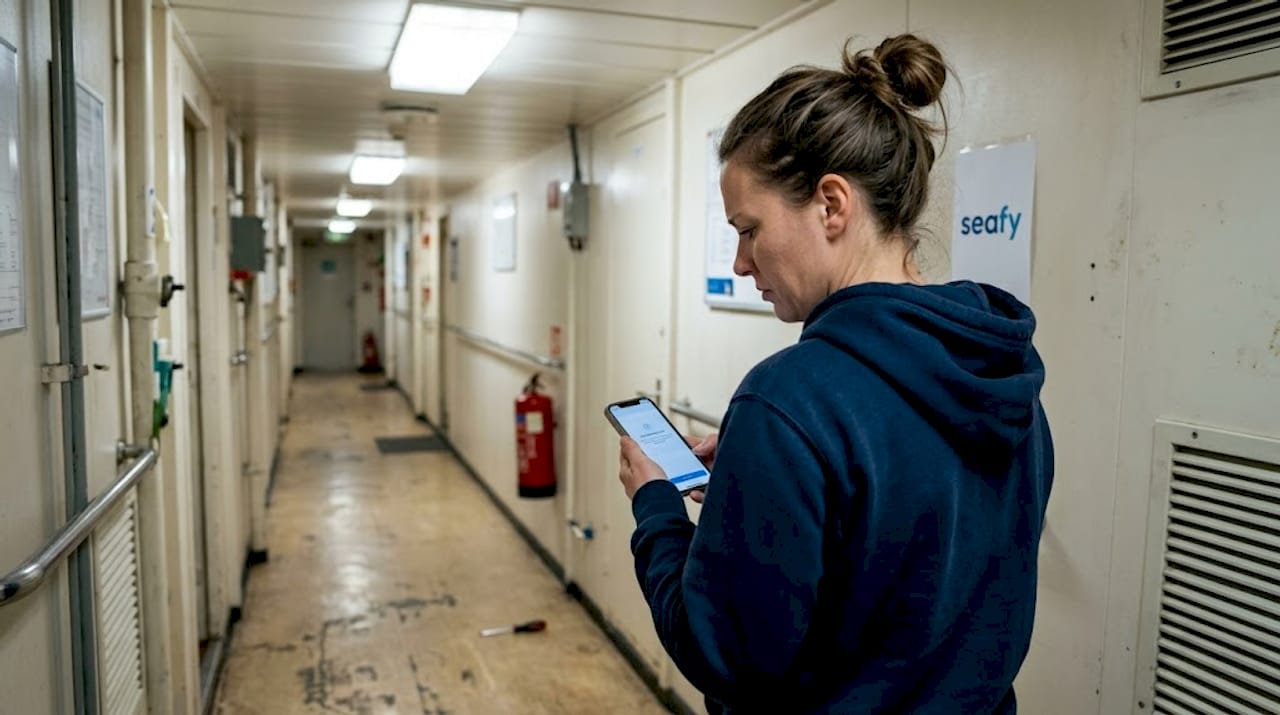
OpenRoaming Wi-Fi models maintain session continuity as you move across the ship, so your video call doesn’t drop when you step out of one zone and into another. This isn’t a luxury feature—it’s a practical necessity for anyone trying to have a meaningful conversation from a cabin or a break room.
Here’s where coverage gaps usually hit hardest:
- Below-deck cabins: Often the weakest signal zones, but where most crew sleep and rest
- Engine room corridors: Limited access points create dead spots for on-call crew
- External decks: Weather-proofing access points adds cost, so outdoor coverage is often skipped
- During rough weather: Signal strength can degrade as satellite alignment shifts
Pro tip: If your ship uses Wi-Fi hotspot solutions, ask whether crew areas include dedicated access points or share capacity with passengers. A shared network almost always means slower speeds during peak times.
For crew doing remote work or welfare calls, the Wi-Fi benefits for sea workers are most fully realized only when coverage follows you wherever you go on board. 🌐
The real Wi-Fi welfare gap: What most solutions miss
Having explored the technical and regulatory picture, it’s time for a reality check: what does the crew welfare gap really look like aboard?
Here’s the uncomfortable truth. Most ships can now say they provide internet. Far fewer can prove they provide internet that actually works for crew welfare. There’s a big difference between ticking a compliance box and genuinely meeting the standard.
Data from the Q3 2025 welfare index confirms that disparity in seafarer connectivity persists despite regulatory guidance. The problem isn’t just technology—it’s how outcomes are measured. Ships should audit allowances, actual speeds, and crew satisfaction regularly, not just at installation.
You have a voice in this. If your internet is unreliable or unfairly restricted, crew feedback on internet quality shapes what changes get prioritized. Report it, document it, and push for improvement. Real welfare means measuring adequacy—not just providing a network and moving on.
Next steps: Getting dependable Wi-Fi for your crew
By understanding what makes reliable Wi-Fi welfare-centric, you’re ready to find solutions that truly support crew life.
Seafy is built for exactly this challenge. Whether you’re on a Mediterranean ferry route or a long-haul cruise circuit, Wi-Fi on board with us is designed to meet real welfare standards: consistent speeds, fair access, and coverage where you actually spend your time. And if you’re evaluating options for your vessel or fleet, learn why our platform changes onboard Wi-Fi with satellite integration and crew-focused design. Your wellbeing depends on staying connected. We make that possible. 🌐

frequently asked questions
What are the minimum Wi-Fi standards ships must provide for crew welfare?
Maritime guidance recommends at least daily bandwidth for messaging, video calling, email, basic web browsing, and online banking, with reasonable or no charge to crew members.
Why do Wi-Fi quality and cost vary so much between ships?
Disparities stem from different providers, budgets, and operator policies. Q3 2025 research confirms that quality and cost discrepancies persist across vessels, leaving some crews significantly underserved.
How do modern Wi-Fi solutions protect crew privacy and data?
Most modern systems use separate crew networks and voucher-based access that isolate personal usage from ship operations, improving both privacy and usage fairness.
What is OpenRoaming Wi-Fi and how does it help crews?
OpenRoaming allows your device to connect automatically and securely as you move through different areas of the ship, so sessions aren’t interrupted during calls or messages.